

What 8 months in South America taught me.
There is a version of me somewhere in South America still.
She’s on a bus with no signal and a window full of Andean sky, thinking she’s just traveling. She doesn’t know yet what’s coming.
Eight months is long enough to forget who you were when you arrived.
And I know this because I’ve tried to remember. The specific weight of that version of me stepping off the plane, the particular shape of what I was carrying. I can feel the outline of her but I can’t fully inhabit her anymore. Something happened between then and now. A series of somethings, a thousand small reckonings that arrived dressed as sunsets, as fevers, as the particular laugh of a stranger who became something like family.
Eight months. Seven countries. A version of myself on the other side that I’m still learning to introduce.
This is what she found out there. This is what I carried home.
You find your people when you stop trying to find them.
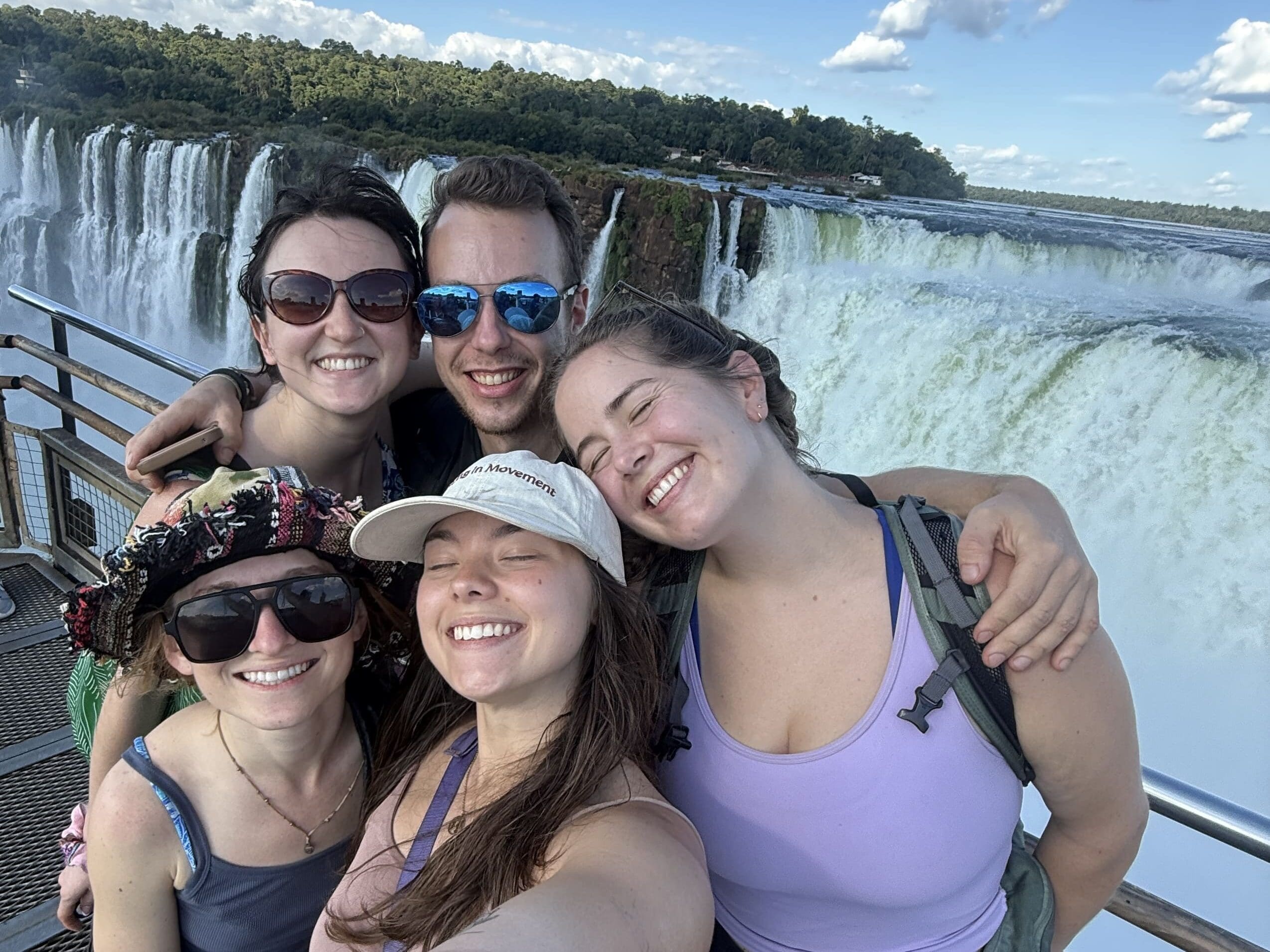
I spent years trying to find my people in the wrong rooms.
You know, the ones where you have a fine time, connect on a surface level, and end the night feeling vaguely like you were performing a version of yourself that was adjacent to the real one, but not quite it. I got good at that performance. I think a lot of us do.
South America dismantled that, though. And I’m so grateful it did.
The people who became my people didn’t find me at a rooftop bar or a hostel happy hour. They found me leap frogging with our groups throughout the entirety of a multi-day trek, too exhausted to be anyone other than exactly who we were. They found me in co-livings where you’re working alongside strangers for weeks and having conversations at 2am that somehow go straight to the marrow. They found me leading conservation-based group trips, caring about the same specific and urgent things I did.
And every single time, the connection didn’t come from looking for it. It came from showing up so fully to the thing itself (the trek, the work, the mission) that there was no room left for performance. You just became yourself, and the right people recognized it.
That pattern repeated itself so many times across eight months that I stopped being able to ignore what it was telling me: belonging isn’t something you find by searching for it. It’s something that arrives as a byproduct of living most honestly. The more you build your life around the things that are genuinely, specifically yours, the more the right people will already be there when you arrive.
You have nothing if you don’t have your health.
I had earned that road trip. Or at least that’s what I told myself.

It was following a month of being shackled to my computer, heads-down and output-focused. I had been running on fumes and forward momentum, telling myself the adventure was coming. Salt flats and volcanic landscapes and the specific freedom of moving through one of the most otherworldly places on earth with nowhere to be but there.
Night two in the back of a tiny car, sharing a blanket that was no match for the desert cold, I barely slept. And when I woke up on the third morning, I knew immediately that there was nothing left. I was emptied. A shell of a human going through the motions of being awake. While the natural wonders waited outside, I did the only thing my body would allow: I found a hostel, booked a room, and spent the entire day willing myself to be okay by morning.
That was the first bill.
The second arrived coming out of Carnaval in Brazil, and by then, I recognized the handwriting. Another season of go-go-go, of saying yes to everything, of treating rest as something to schedule later. My body didn’t argue this time, didn’t send warning signs I could choose to ignore. It just stopped me.
I had been so focused on not wasting a single moment of the experience that I had forgotten the experience requires a body to live inside of. And that body has limits I don’t get to negotiate.
I started my health journey straight out of that Atacama road trip, and now I carry a food scale with me from country to country and prioritize the gym (ideally) 4 times a week. I’m still learning what it means to take care of the thing that carries everything else, but I think about that day in the Atacama often, and I use it the way I think it was always meant to be used.
As a reminder of what actually comes first.
We are insignificant. And that is the best news I’ve ever received.
I was in Pisac, Peru, sitting withan English man I had known for a week (and would come to consider one of my closest friends), and our 30-year-old Argentinian guide.
We spent the morning outside in the mountains as the medicine began to move through us and before I knew it, San Pedro, the sacred Andean cactus, had transformed my surroundings. Looking around myself, the landscape felt less like scenery and more like something breathing. Something aware.
But this wasn’t the moment. Instead, back with four walls around us, it arrived in a bowl.
Lunch was served simply. Quinoa, carrots, spinach, tomato. Nothing remarkable on paper.. I mean, rather ‘bland’ if you ask literally anyone. And yet when I held that bowl and brought the first forkful to my mouth, I realized that I could taste everything. Not just the food, but the soil it came from, the rain that fed it, the hands that grew it. It was the most fascinating thing that had ever been placed in front of me. And in that simplicity, something enormous became obvious.
This is all it is. This is all it has ever been.
We came from the earth. We will return to it. The boundary I had spent my whole life maintaining between myself and everything else – between me and the mountain, between me and the soil, between me and the people who had lived and died on this ground long before I arrived – was entirely invented. We are not moving through the world. We are the world, temporarily organized into the shape of a person, briefly conscious of itself.
We are insignificant. And that is a relief.
I stopped being afraid of so many things that afternoon in Pisac. When you understand how small you are, the things you’ve been white-knuckling start to loosen their grip.
The “danger” was never what they’ve said it is.
Before I visited Colombia for the first time, people told me not to go. That it was “too dangerous.” They said it with the kind of certainty that’s hard to argue with in the moment.
Yet… most of them had never been.
There’s a difference between informed caution and inherited fear, and learning to tell them apart might be one of the most important things I did before I ever boarded a plane.
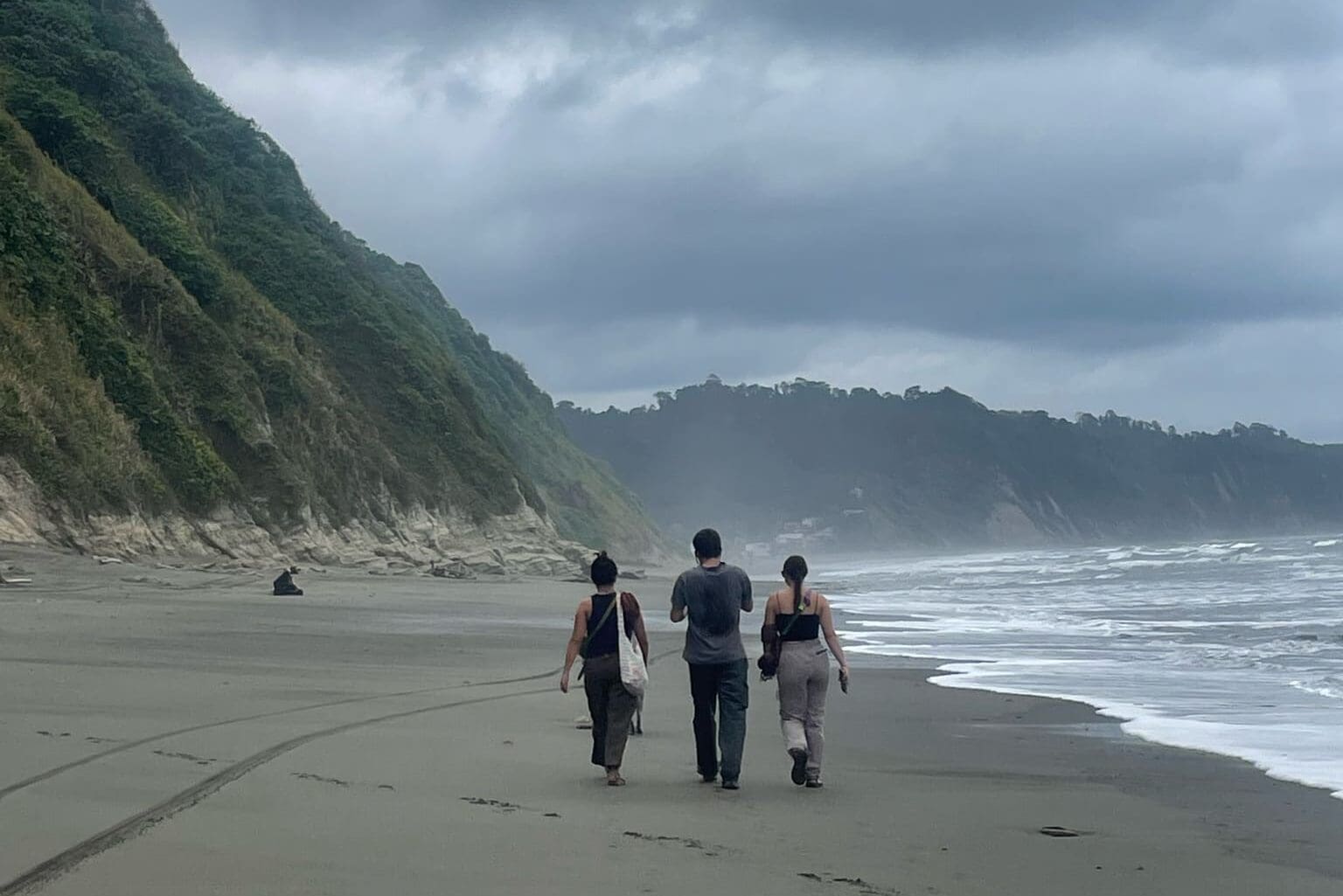
Informed caution is researched, specific, contextual. It says: be aware here, move carefully there, trust your gut in this situation.
Inherited fear, on the other hand, is vaguer and louder. It says: everyone knows, I heard that, you just never know. And it has kept more people from living their lives than any actual danger ever has.
The people I encountered across South America were some of the most generous, warm, and genuinely community-minded humans I have ever met. I was helped by strangers more times than I can count simply because that is the culture.
That’s the thing about inherited fear: it’s loud in all the wrong directions. It warns you about the place instead of teaching you to trust yourself inside it.
Joy is a practice. South America does not let you forget this.
There is something incredibly challenging about watching people with very little, live with so much.
I don’t mean that in a pitying way.
I watched it happen across countries, across cultures, across circumstances that by every metric I had been taught to measure by, should have produced scarcity and closed doors.
And instead, I found music bleeding out of buildings at midnight, strangers feeding you before they’d even learned your name, laughter that seemed to come from somewhere deep and unguarded.
It is uncomfortable, if you let yourself sit with it honestly. Because it asks a question you can’t unhear: if the things I’ve been told will make me happy (the stability, the security, the accumulation) were actually working, why does this feel like more?
I’m not romanticizing hardship, and I’m not suggesting systems don’t need to change. What I’m saying is that somewhere along the way I absorbed a story that joy was a destination. Something you arrived at once enough boxes were checked.
South America showed me, repeatedly and undeniably, that the people living closest to joy weren’t waiting for anything. They had just decided.
There will always be a grief of leaving, but it is purely a measure of what you found.
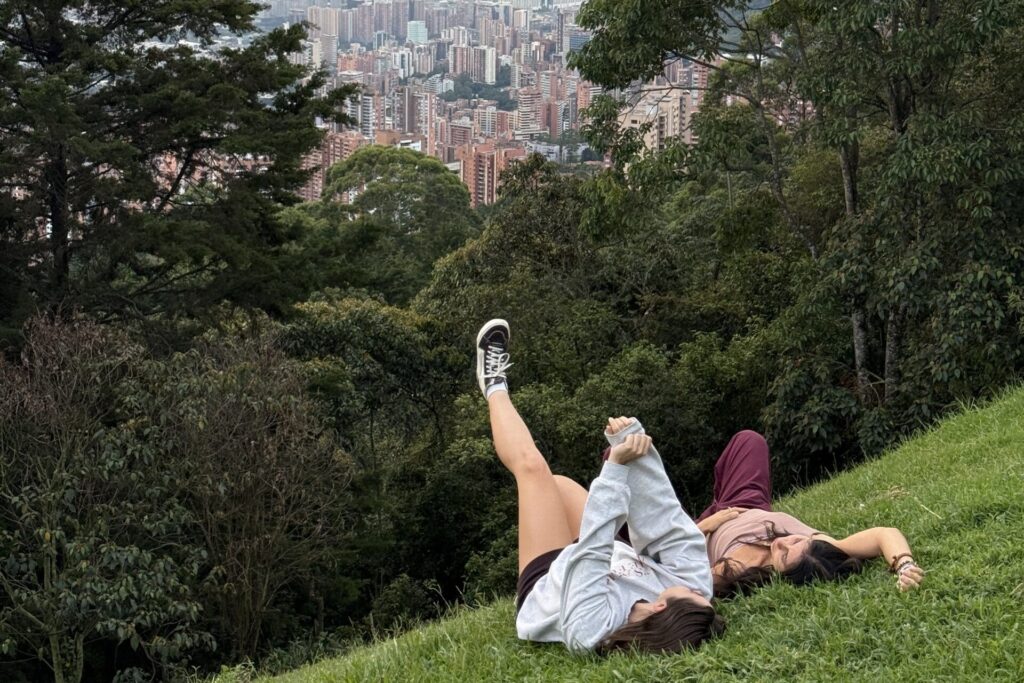
The first goodbye is manageable. You console yourself with the smallness of the world, the ease of flights, the group chat that will “definitely” stay active. But by the tenth goodbye, there is a weight to it that no amount of reasoning can lift. It just lives in your chest, tender and heavy and strangely permanent.
What I came to understand is that the grief doesn’t grow because you’re losing more. It grows because you’ve found more. Every place that marks you – or more realistically (let’s say it how it is) every person – adds to the toll.
But this is not a flaw in the experience. You don’t grieve what didn’t matter.
What I’ve found, though, through every single mini heart break of people I love who are now scattered across the world, is a kind of peace in the impermanence. Because these moments – that sunrise hike in Patagonia or the night spent around the table unpacking the things that make us who we are – can never be reconstructed. Not exactly. Even if every one of us returned to the same place, we would be different people standing in it. The exact alchemy of that moment existed once, in that configuration, and it will never exist again.
And that’s what makes it sacred.
The unrepeatable nature of a moment is what gives it its weight. If we could return to it whenever we wanted, we wouldn’t know to hold it so carefully the first time.
The grief is just love with nowhere left to go, and proof that something real took place.

Be the first to comment